


Blog
Thoughts and things I care to shareCross Country
 It’s amazing, sometimes, how easily we forget how big, how expansive our country is. The time it takes to drive across one state or another is not inconsequential and each time the scenery is worth paying attention to. The diversity of the landscapes always impresses me.
From the sweeping agricultural plains to the industrial and commercial centers of urban life, to the majestic mountains or coastline it never ceases to teach. Every trip I take, I learn something new. Either about the area I’m visiting, or the region I’m traveling through, the history and culture of the area presents a new opportunity to learn more about my fellow countrymen. It gives me a better idea of how the things I do fit into the world, and how we all relate to each other.
 The other thing is the opportunity to travel across rather than over. While flying is faster, it’s certainly not rewarding. The hassles of security stops and checks is inconvenient, especially with the false sense of security it provides. Traveling on the road can be much more rewarding if you have the time. You get to see the country, meet the people, and experience the contours of the land, something that’s lost at 40,000 feet.
Another perspective is the people. You learn so much from the characters you meet and where they’re from. It can help look at things from another angle and learn what kinds of perceptions exist and why. These help us build better products and provide better services. Not just because they’re cool, but because they are useful. Because people need or want them.
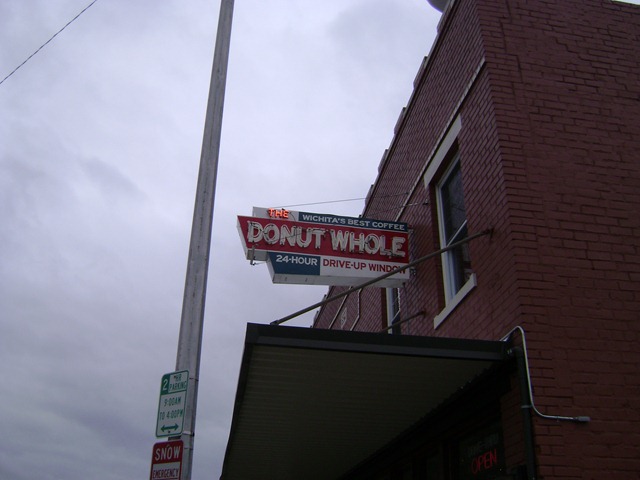 I write this on the return leg of a road trip to South by Southwest (SXSW) in Austin, TX. Over a week on the road getting a full dose of fresh perspective has reset my direction and attitude. The results are the only thing left to focus on, and I need to thank this experience and the trip itself for the bulk of that new thinking.
Have you done a long distance road trip lately? What have you learned that can help others?
Bloggers Lounge at SXSW
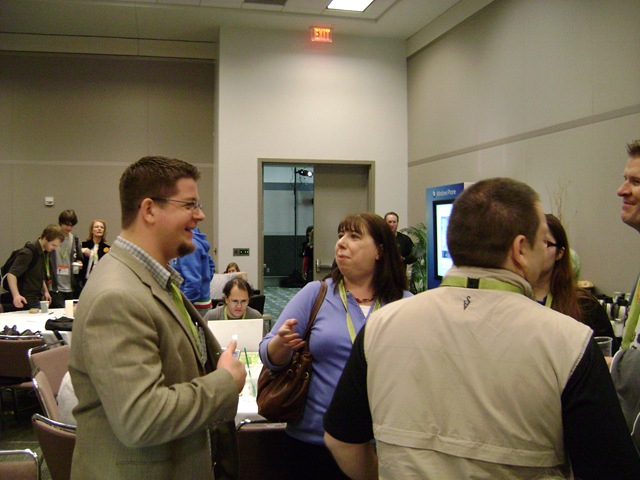
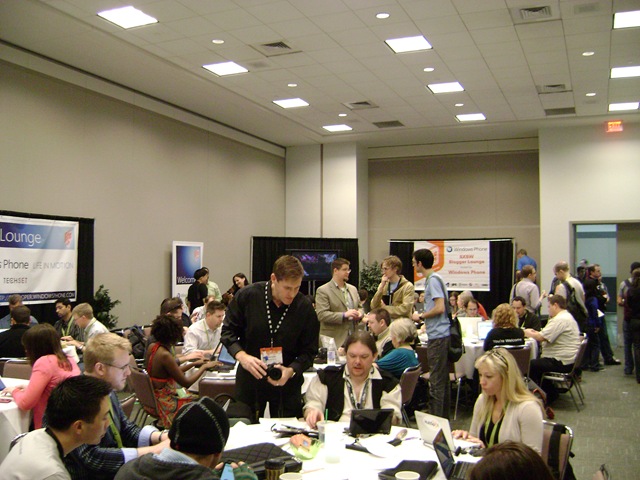
Ok, it’s my first day at SXSW, and I’ve already run into about 10 online friends in the first hour here at the Austin Convention Center.
I decided to start the day in the Bloggers Lounge, which most of the folks I’ve connected with online over the last many years. The lounge is set up with wired Internet and power for everyone who comes in, and there’s a bookable space for podcasting and videocasting or recording shows.
Altogether, it’s a great resource for bloggers as they create content and network with each other.
Behind The Firewall: Challenges
 I’d like to take a minute and tell you a bit about the concept of Behind The Firewall and what this project is about.
Behind The Firewall is an ongoing project of Arik Hanson and myself to explore the uses of social media inside companies. Our goal is to uncover the ideas, recommendations, solutions, and experiences of internal communicators, marketers, collaboration experts, team & project leads, and really anyone who is working to empower their organization through the use of social media.
There are always challenges in doing something new. Inside a large corporation, we run across a number of things that can keep innovation from occurring, or at least, minimizes the change brought about by innovation.
Social media is one of those combination’s of skills, tool-sets, and creativity. It challenges the accepted practices of the old guard and makes companies (i.e. groups of people working together) uncomfortable.
Perceptions
Of course, a discussion of the challenges of social media within an organization has to start somewhere, and one of the most critical things folks will run across is it’s perception. Many people already have an idea of what social media is, what it’s used for, and who uses it.
Of course, the problem with perceptions is that they’re often wrong. It’s your first job to start either changing the perception, or more importantly, setting them. People usually will give you a chance to explain something new before really making a judgment call on it. Give them the wrong impression, and you’ve then set a perception about what you’re doing that you’ll have to work hard to overcome. Take the time to really understand who you’re talking to before trying to tell people about what social media can do.
Culture
Another challenge to exploring corporate social media use is the culture in that company. Many conservative organizations have very rigid structures, several management levels, and an entrenched bureaucracy to deal with. Overcoming this impediment takes time, once again to learn the culture and how it works.
The opportunity in this should be to make connections to the influencers in the company. These folks are usually more open to new ideas, and can often be approachable, even if some of their team says otherwise. Most people that gain attention inside any organization have good ideas and management pays attention to folks with good ideas. Work on developing a relationship with these folks because they have the potential to become your most powerful advocates for change.
Education
This is key and one of the more important things to focus on. When given the chance, always try to educate rather than preach – we all hear enough hype and buzz already. Education on the value of social media is crucial to gaining trust on the topic with middle management. Keep the explanations simple, to the point, and most importantly, relevant to either the business or the manager’s scope of responsibility. Anything more than that can sometimes confuse the point you’re trying to share.
Secondly on the point of education, make sure to keep it short. Don’t expect managers to appreciate a two hour or longer training session. If you can’t communicate that in an hour, you’re being too verbose. Actually, figure only 30 minutes for a 1 hour session because of the overhead of training managers.
More to Come
Of course, there’s much more to it all and even the points talked about here offer themselves to additional detail and discussion. I look to continue delving into the challenges & opportunities of bringing social media inside companies, behind the firewall.
Behind The Firewall is an ongoing series of blog posts, Twitter chats and more. Created and lead by Arik Hanson and Rick Mahn, these discussions explore the world of the social web inside companies & organizations, “Behind The Firewall” if you will.
Surrounding Yourself for Success
 Knowledgeable entrepreneurs do it all the time, why shouldn’t you?
We all know many knowledgeable people who help us navigate the pitfalls of career and life. Many times it’s family, friends and co-workers – of which there’s nothing wrong with listening & learning from.
However, what if you seek out and select new or additional influencers to augment what you’ve inherited by default? Basically, what if you got to select who you get to learn from? Why aren’t you doing this already?
Every day we’re interacting with people who have something to share. If they’re not sharing ideas and thoughts that move us forward, what inspiration or feedback are you getting? Look closer, I believe there is something more there than you expect.
I suggest that you get out and start connecting with peers and experts in your field. (That’s called networking to you and me.) In the end, you’ll find folks who want to work with you, share with you, and learn from you. That’s the reward by the way, transfer of knowledge, sharing of experiences, the ability to learn form others experience and make something better with them in the end.
Picture courtesy of kalieye
Is the iPad Apple’s Vista?
< warning >I’m not an Apple Fanboy, but I play one in this post< /warning >
Hardly, but I do have a point to make so hang with me.
In Windows Vista in 2007, Microsoft had rebuilt several portions of it’s operating system, installed a new device driver model & API, updated the UI for a more modern feel, and polished many areas in need of attention. Of course, there were ineveitable issues, especially for poorly written, decade-old, legacy applications that many companies run their business. Also at issue at the time were a lack of device drivers for anything other than the most generic hardware & peripherals. Because of these issues , and a few others, the press and bloggers couldn’t help but tear the new OS to shreads and created a huge discussion that Microsoft never saw coming.
 Of course being in IT myself, I couldn’t figure out the fuss – after all, I’d heard it 6 years earlier. The same criticisms were thrown about from the same sources about Windows XP in 2001. So what was the difference?
Social Media.
In 2001, the blogosphere was much smaller, not taken for serious journalism or news, and didn’t cause any more product or public relations for Microsoft than an Op-Ed piece in your hometown newspaper at the time. In 2007 that was totally different and was the driving factor of creating the impression that Microsoft release a completely inept piece of software that they expected people to pay a premium for. In short, Microsoft never got out front of the issue to listen and participate.
So here we are in 2010 and a large chunk of initial reviews and feedback for the new Apple iPad is fairly negative. “They under-delivered”, “Didn’t they market-test that name?”, “doesn’t look too sturdy”, “it’s an over-sized iPhone”, “where’s the camera?”, “doesn’t run OS/X”, “we expected more from Apple…”.
I highly doubt that Apple will have an issue with negative press in the long run and I fully expect the iPad to succeed where other efforts in this ‘tween area of mobile technology have failed. The key is to look not at the hardware, but what Jobs and Co. had set out to do.
 This space between smartphone and laptop is rare territory. We tend to expect computing power approaching a real computer, but we want that half-pound sized, last-all-day battery, instant on, always connected device to cost us about $300 (less is better). We’ve experienced some of this in Netbooks, and while totally disagree with Jobs’ position on them, they deliver the content in a different way, and really fit for a different crowd (budget conscious & tech geeks).
The iPad is one device that was truly built for the specific market it’s targeted at. It’s a content consumption device, plain and simple. Having a slate/tablet style device that allows you to consume blogs, news, books, video, streaming content, music, podcasts, email, social networking, and also create content as well in a hand-held format that we’re all comfortable with is just too great. They even got the pricing in the right area, which is something Apple only get’s right for itself. 😛
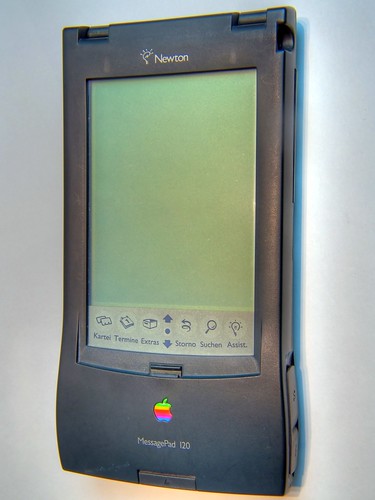
Simply from my perspective, the iPad is the first Apple product that speaks to me, that answers a need that I have. I find that kind of surprising after all the wildly successful products they have, the one that peeks my interest is the one that isn’t quite as well received. That hasn’t happened since the Newton – and yes I owned one of those. It was way ahead of it’s time, but unlike 1995, the market is looking for this kind of product.
Photo credit: Joachim S. Müller
Personal Branding Magazine – Issue 9
 There’s a magazine I’ve been contributing to for almost three years, and if you’re looking for a great resource on personal branding and career growth, I highly recommend it!
Summary: Volume 3, Issue 3 is about becoming so important to your company, your customers and the people around you, that they can’t live without you. When that occurs, you’ll be making more money, have better relationships and wield a powerful personal brand. In this issue, Seth Godin reveals his hope for career revolutionaries who want to remain relevant in a world that is being transformed by the internet. Also, in this issue we explore how Guy Fieri has built his personal brand as a television personality on the food network and how NFL football player Jarvis Green has taken the leap into entrepreneurship.
If you’re simply curious and would like to sample the magazine rather than a full subscription, check out the sample issue here: www.personalbrandingsample.com
Full subscriptions ( 50% of the proceeds benefit the American Cancer Society) and all the information about contributing authors and guest writers is available here: www.personalbrandingmag.com
Here’s publisher Dan Schawbel on the latest issue:
Follow Personal Branding Magazine on Facebook.
Next Stage Business Radio – Organization of the Week
 I had the great opportunity to talk with Pamela Muldoon, host of Next Stage Business Radio. Our own Social Media Breakfast (SMBMSP) was highlighted as the organization of the week and I got to share some insights about our organization on Saturday, January 23rd, 2010.
Next Stage Business Radio brings “local and national experts, business owners, and thought leaders for tips, techniques and resources on starting, building and maintaining a successful small business” every week.
You can download the whole show at http://www.nextstagebusinessradio.com/archived-programs.html for the next few weeks.
Below is the segment of the show where we talked about SMBMSP.
SMBMSP January 2010 Podcast
 Show Date: January, 22nd, 2010
Produced by BellaMedia http://www.bellamediaonline.com
Hosts: Rick Mahn, Mykl Roventine, Brad Bellaver
Special Guest: Thomas Knoll http://twitter.com/thomasknoll
Join us for the January show in which we talk with Thomas Knoll about the startup culture and how it differs from the tech-heavy silicon valley to our own Minneapolis/St. Paul area. Upcoming events are talked about, and we welcome new members to the SMBMSP online family.
Links:
SMBMSP Store – http://www.cafepress.com/smbmsp/
SMBMSP website – http://smbmsp.org
How are we doing? Please send feedback to smbmsp@gmail.com
Changes and Challenges
Changes & Challenges
Challenges – the unique opportunity to see if we’re good enough. It lives within us all, and the organizations we work with as well. Do we really have what it takes? Can we really meet the expectations that are set without our control? Can we let go of control and still be able to survive?
So it is with social media in business. Taking the concepts of transparency and community behind the firewall brings numerous challenges and requires many changes in a company’s culture. If that culture is too ridgid, the change is met with skepticism and sometimes fear. The fear comes from losing control, or from having to learn yet another set of skills that leave you further behind that your contemporaries.
Whatever the case, the challenges of organizations taking up social media can easily derail many attempts that were designed to enhance the company’s ability to move forward. Its the opportunity for individuals within the organization to help lead, help educate, and help demonstrate how things can be done. The question becomes how to educate and train people on these new methods, along with selecting the proper solution for the business need at hand.
Oftentimes, the social media “expert” you hire has a direct impact on the success – many times because of the focus on the tool rather than solving the need. You see, social media is no different than anything else. It’s a set of ideas or concepts. It consists of a number of possible technologies. To be successful, you need to understand the requirements (needs) of the business before selecting the right tool.
You wouldn’t use a Standard blade screwdriver to tighten a Phillips screw, so why would you select the wrong tool in social media?
I think the confusion come from the number of tools, and the fact that nearly all of them overlap in one or more area. This is where the knowledge of the social media professional needs to be leveraged. The person who helps coach you through the identification of needs and selection of tools will need to have worked with them in multiple ways so they understand what would work best in your application.
Identify the challenges of your company and the changes needed to move forward and you’re on your way to providing what your company needs to remain competitive as the world changes around us.
More resources to share
 Its been awhile since I talked about sharing information, so I thought I’d drop this quick post and let folks know where I’m sharing some of the things I’m finding and reading around the web these days.
Google Reader Shared Items
The time tested, sharing features of Google Reader still apply. Some of this information in my shared items is quick hits, that I don’t have anything to add opinion-wise. Simply things I think you may find interesting. Things included span from social media, to gadget/mobile devices, software, opinion/editorials, and cultural/social topics.
www.google.com/reader/shared/rickmahn
Posterous
I’ve set up a Posterous account, like many folks, and post items I’ve read and may be relevant to folks I know, or that may be in social media professions and have interest in technology as well. This is a bit more focused than my Google Shared Items.
Reading Lists
I’ve got a number of reading lists for myself and for peers at work & clients. I currently use three lists, though I’ll try to narrow that down in the future.
Read It Later – This is a list that I use as I find links from Twitter, or from other social media resources. The topics cover social media in general and a bit of mobile technology. FYI, this is an RSS feed.
Instapaper – This is a list of things I share for peers at work and clients. This list is social media specific, and focuses on business use, communications, marketing, PR. FYI, this is an RSS feed.
FriendFeed – If you want the firehose, this is it. It’s basically my lifestream of all online services and content.
I also happen to use Google Reader Starred Items though there doesn’t seem to be a way to share that list. It, of course, is the list of things I have marked for my personal consumption. Hopefully I’ll get to all of them.
I try not to duplicate shared or bookmarked items, though it could happen. I hope this helps in your daily reading and information-gathering efforts. Maybe if I pre-read and filter out the nonsense posts out there, these will be of more value.
What tools for sharing information and links do you use?


@MAC_Arms Pay taxes when you make your money, pay taxes when you spend your money, pay taxes when you successfully invest your money, pay taxes when you save enough taxed money to afford a house, pay taxes to live in your house, pay taxes when you sell the house that you paid taxes on to

Yup, taxes are criminal and we need serious reforms. I've always said that if you want to see a tax revolt, make withholdings illegal and have Americans write a tax check every payday. They'll revolt for sure. You don't miss what you never had.

I think it’s safe to say that @GovEvers should stop blocking audits in Wisconsin and open the books…

“Only AMERICAN citizens should vote.”
Sen. @berniemoreno says voter ID and proof of citizenship are simply common sense.
“We’re talking about a very low threshold — identify who you are and prove you’re a U.S. citizen when you register to vote. I think we’re getting closer to

Wrong. Democrats are solely responsible for hours-long airport lines.
They voted to defund TSA three times and won’t even entertain a conversation about reopening it. Why?
They’re using it as leverage to stop enforcing immigration laws.
You must be logged in to post a comment.